Complete Capybara Care Guide: What Responsible Ownership Really Takes
Capybaras (Hydrochoerus hydrochaeris) are the world’s largest living rodents—semi-aquatic, highly social grazing herbivores native to South American wetlands. While their calm demeanor on social media makes them look like oversized guinea pigs, caring for a capybara requires specialized livestock-grade infrastructure, a year-round heated swimming source, a companion herd, and an exotic-mammal veterinarian. Before considering ownership, always check our Capybara Laws by State hub and read our full Capybara as a Pet guide.
1. Social Needs: Why You Should Never Keep a Single Capybara
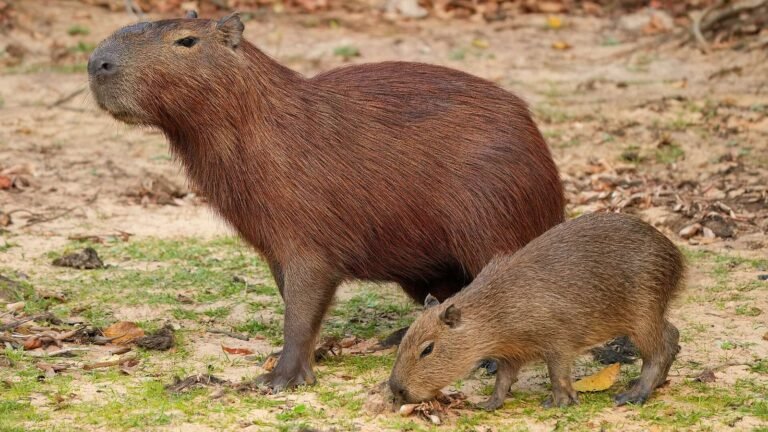
In the wild, capybaras live in cohesive family groups of 10 to 20 individuals (and larger dry-season aggregations around water). A solitary capybara experiences chronic stress, vocalizes excessively, and can develop stereotypic behaviors or fear-based aggression. Responsible keepers and accredited zoological facilities always house capybaras in compatible pairs or small groups—typically two females or neutered males raised together from weaning. Learn more in our deep dive on capybara social structure.
2. Enclosure, Fencing & Land Space Requirements
Adult capybaras weigh 35 to 66 kg (77 to 146 lbs) and need generous outdoor grazing yard space—at least 200 to 300 square feet of secure outdoor paddock per pair, with larger pasture strongly preferred:
- Fencing: Heavy-gauge welded wire or chain-link fencing at least 4 to 5 feet high. Because capybaras dig and push under barriers, bury an apron of wire 12–18 inches underground or pour a concrete curb along the perimeter.
- Heated Shelter: An insulated, draft-free barn stall or shed bedded deeply with clean grass hay or pine shavings. Capybaras are native to tropical and subtropical climates; whenever temperatures drop below 50°F (10°C), supplemental radiant heat is required to prevent hypothermia and frostbite on ears and toes.
- Shade & Mud Wallows: Capybaras have sparse sweat glands and rely on shade trees, shelters, and water to regulate body temperature in summer.
3. Swimming Water: The Non-Negotiable Daily Requirement
Water is central to capybara biology. They mate, thermoregulate, escape perceived threats, and defecate in water, and their skin quickly becomes dry, flaky, and cracked without daily immersion. A wading pan is not enough—capybaras need a pool or pond deep enough (at least 3 to 4 feet) to submerge completely and swim:
- Filtration & Draining: Because capybaras routinely defecate in water, stock tanks or ponds require either bottom drains for daily/every-other-day flushing or heavy-duty solids-handling pond filtration.
- Ramps & Steps: Provide wide, textured entry ramps so heavy adults and juveniles can enter and exit safely without slipping or injuring joints.
- Winter Heating: In cooler climates, keepers must provide a heated indoor pool or stock-tank heater protected by a chew-proof guard—similar to the warm baths covered in our Japan Capybara Hot Springs Guide.
4. Diet, Hay, Vitamin C & Dental Wear
Like guinea pigs, capybaras have open-rooted (hypsodont, elodont) incisors AND cheek teeth that grow continuously throughout life, and they lack the enzyme L-gulonolactone oxidase needed to synthesize their own Vitamin C. An improper diet quickly leads to fatal dental malocclusion or scurvy. See our full Capybara Diet Guide for daily feeding ratios:
- 75–80% Grass & Grass Hay: Unlimited fresh pasture grass and high-fiber orchard, timothy, or Bermuda grass hay available 24/7. Silica in grasses wears down their ever-growing molars.
- Stabilized Pellets & Vitamin C: Fortified guinea-pig or exotic-rodent pellets with stabilized Vitamin C, supplemented daily with vitamin-C-rich leafy greens (romaine, dandelion greens, bell pepper slices) or veterinary ascorbic acid tablets.
- What to Avoid: Sugary fruits in large amounts, starchy human snacks, dairy, meat, and toxic ornamental plants.
- Cecotrophy: Capybaras naturally re-ingest soft nutrient-rich cecotropes (especially in the morning) to absorb B vitamins and microbial protein—never discourage this normal digestive behavior.
5. Hygiene, Potty Training, Temperament & Biting
Because capybaras instinctually eliminate in water, many keepers train young capybaras to use a shallow water tub as a litter pan indoors or on porches—read our step-by-step Capybara Potty Training Guide and our explainer on whether capybaras smell. However, adult intact males develop a prominent nasal scent gland (the morrillo) and mark territory heavily with oil and urine.
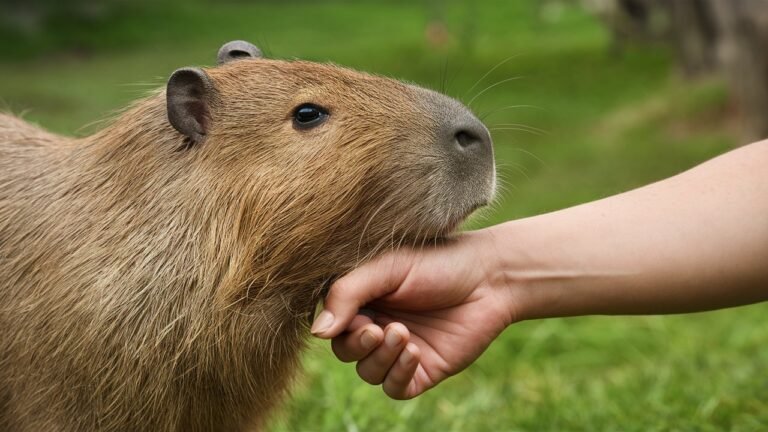
While socialized capybaras enjoy gentle chin and belly scratches, they are not domesticated animals. Startled, cornered, or improperly handled capybaras can inflict severe bites with their chisel-like incisors—learn the warning signs (tooth chattering, sharp barks, stiff posture) in Do Capybaras Bite? and Capybara Sounds Explained.
6. Veterinary Care, Common Health Issues & Lifetime Cost
Before acquiring a capybara, confirm in writing that a board-certified exotic or zoo veterinarian within driving distance will accept capybaras as patients. Key health priorities covered in our Capybara Health Problems and Capybara Cost Breakdown guides include:
- Scurvy (Hypovitaminosis C): Causes swollen joints, lethargy, bleeding gums, rough coat, and loose teeth; prevented with daily stabilized Vitamin C.
- Dental Overgrowth: Requires routine oral exams and lifelong silica-rich grass hay.
- Pododermatitis (Bumblefoot) & Dry Skin: Caused by abrasive concrete flooring without soft bedding or inadequate swimming water access.
- Parasites & Heat/Cold Stress: Annual fecal screenings, tick prevention in endemic areas, and strict climate protection below 50°F (10°C) or above 90°F (32°C) without deep shade and cool water.
Explore All Capybara Care & Ownership Guides
Care guide
Capybara care, step by step
Capybaras are social, semi-aquatic and need a lot of space. These guides cover what they need every day.