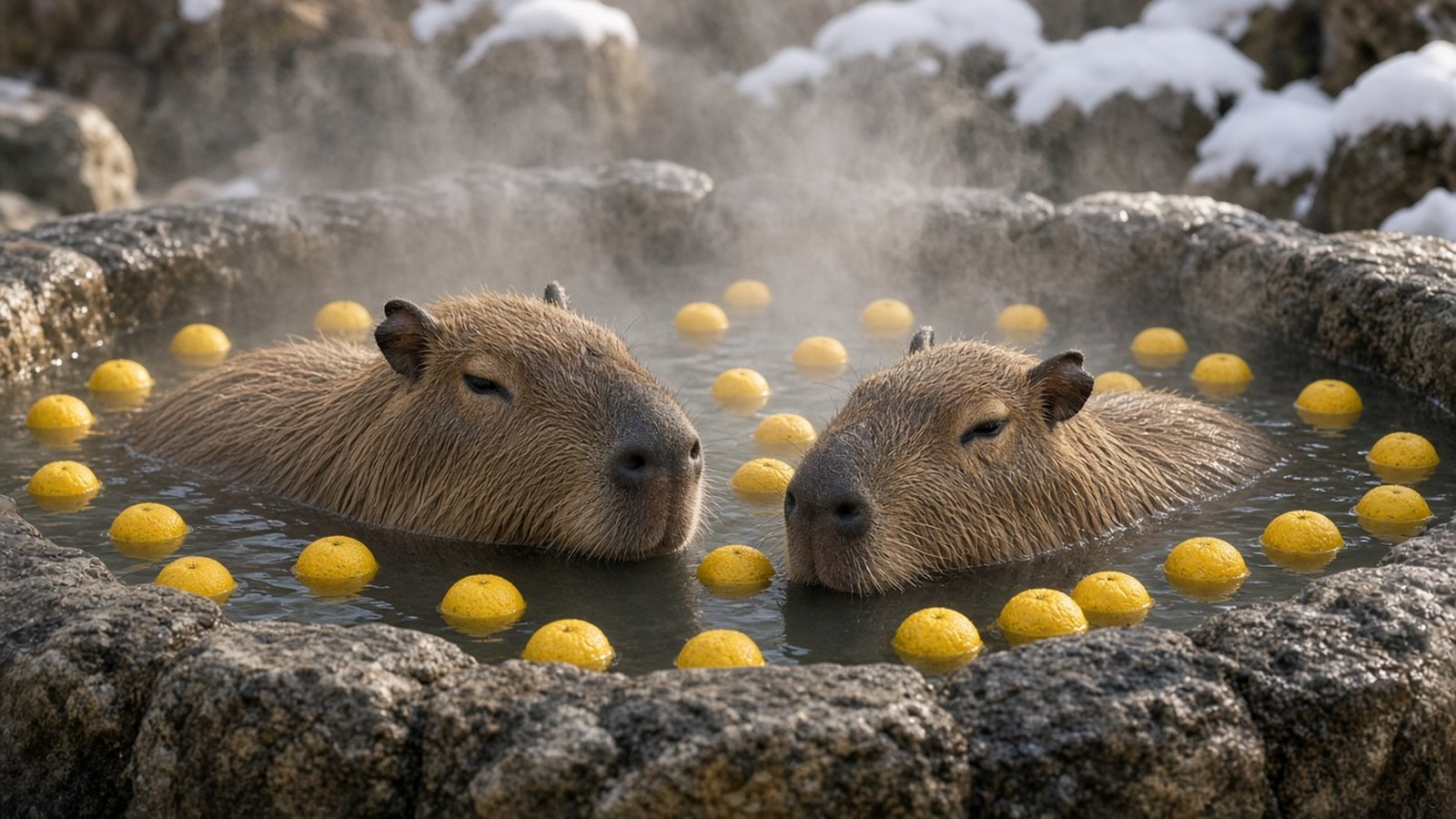
Every December, photos of blissed-out capybaras floating among bright yellow citrus fruit go viral. This is the capybara yuzu bath, a charming mash-up of a centuries-old Japanese winter-solstice custom and a zoo tradition that began by accident more than 40 years ago. Here’s the full story, plus where and when you can see it.
What Is Yuzu-yu?
Yuzu-yu (柚子湯) means “yuzu hot water.” On Tōji, the winter solstice (around December 21–22), many Japanese families and public bathhouses float whole yuzu—a fragrant, knobbly citrus—in hot baths. Tradition says the bath wards off colds for the coming winter, and the oils in the peel give the water a lovely citrus scent. There’s also a pun: “tōji” can mean both “winter solstice” and “hot-spring cure,” and “yuzu” sounds like “yūzū” (flexibility).
How Capybaras Got Their Own Hot Baths
The capybara bath started at Izu Shaboten Zoo in Shizuoka in the early 1980s. The widely told story is that a keeper cleaning the enclosure with warm water noticed the capybaras gathering happily in the steaming puddle. The zoo built them an outdoor bath, and the “capybara rotenburo” (open-air bath) became a winter favorite. Adding yuzu around the solstice was a natural next step.
Today many Japanese zoos and parks run capybara baths through the cold months, often with themed additions—yuzu at the solstice, and sometimes apples, herbs or other seasonal touches. See our capybara hot spring Japan guide for a deeper look at the onsen season.
Why Do Capybaras Like Warm Baths?
- They’re built for water. Capybaras are semi-aquatic, with partly webbed feet and eyes, ears and nostrils high on the head (how capybaras swim).
- They come from warm climates. Native to South America (where capybaras live), they have sparse, coarse hair and little insulation, so Japanese winters feel cold.
- Warm water is relaxing. Keepers report capybaras closing their eyes and dozing—the source of their “zen” reputation (why capybaras are so chill).
- It’s social. Capybaras love to do things together, so a group bath fits their herd life (capybara social structure).
Do Capybaras Eat the Yuzu?
Sometimes they nibble them! Capybaras are herbivores and do sample fruit (capybara diet). Keepers watch to make sure no one overindulges—fruit is a treat, not a staple. The habit of balancing citrus on a capybara’s head is also behind the internet meme explained in why capybaras like oranges.
Where to See a Capybara Yuzu Bath
- Izu Shaboten Zoo (Shizuoka): the original, with a long winter bath season.
- Nagasaki Bio Park (Nagasaki): famous for its open-air capybara bath.
- Nasu Animal Kingdom (Tochigi): capybara baths in a snowy setting.
- Saitama Children’s Zoo and other regional zoos: many run solstice yuzu events.
Schedules change yearly, so check each zoo’s official website or social accounts in early December. For more places to meet capybaras, see capybara zoos.
When to Go in 2026
The 2026 winter solstice falls on Monday, December 21 in Japan. Yuzu baths are usually held on or around that date, and capybara bath seasons generally run from late autumn into early spring. Mornings tend to be quieter, and cold, clear days create the most dramatic steam for photos.
Visitor Tips
- Arrive early on solstice weekends—it’s a popular event.
- Use a zoom lens or phone telephoto instead of leaning over barriers.
- Follow keeper instructions; don’t throw fruit or food into the bath.
- Dress warmly—the capybaras are cozy, but you’ll be standing outside.
Bring the Yuzu Bath Home
Download our new capibara animada yuzu bath 4K wallpaper or the hot spring capybara wallpaper, and browse more capybara wallpapers.
FAQ
Is the hot water safe for capybaras?
Yes—zoos keep it warm, not hot, and the animals can get in and out freely.
Why yuzu and not oranges?
Yuzu is the fruit traditionally used in Japan’s solstice bath. Some zoos also use other citrus.
Can pet capybaras have warm baths?
A clean pool is essential for pet capybaras; in cold climates owners often use heated water. Read capybara care first.